


Description
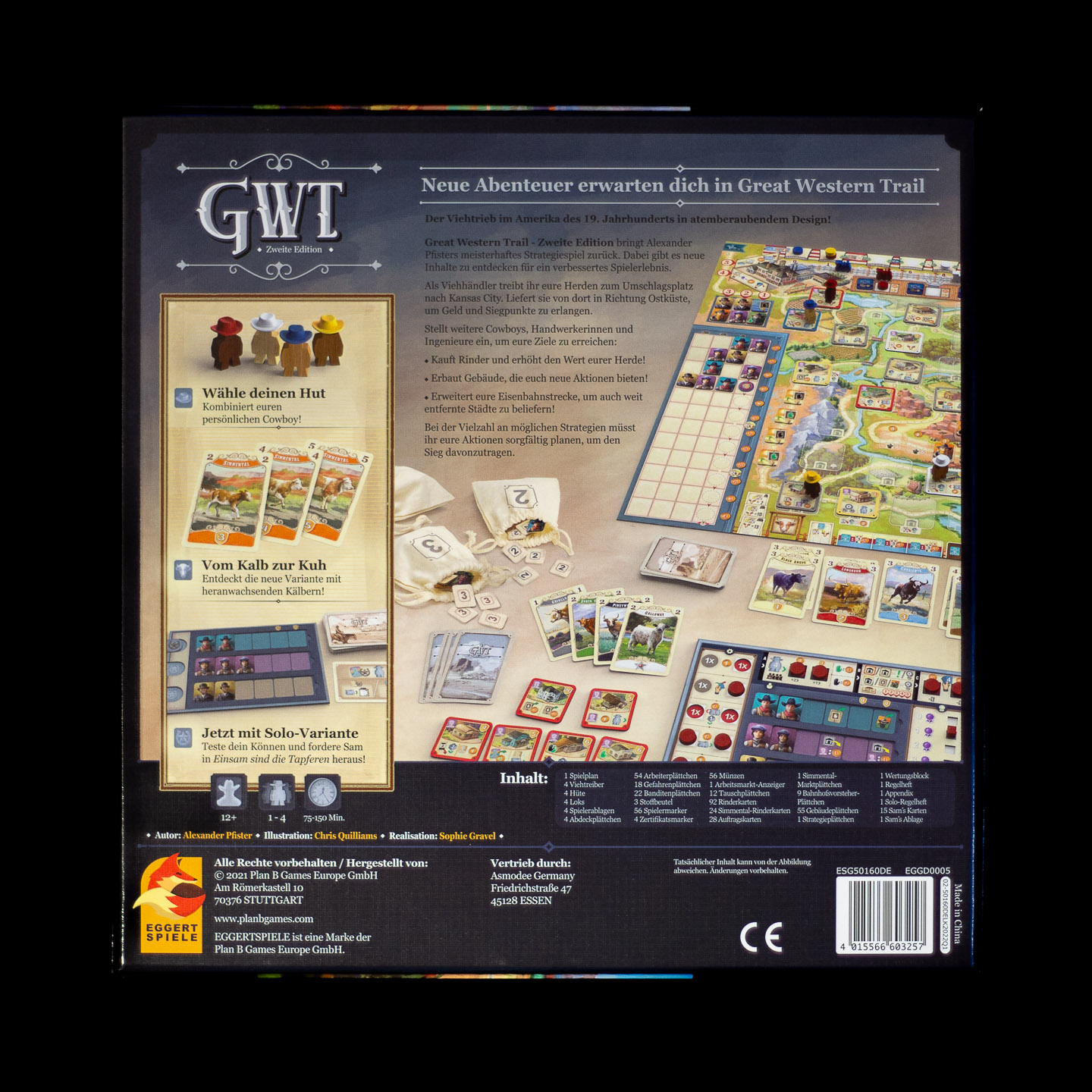
The "Great Western Trail" trilogy, designed by Alexander Pfister and published by Plan B Games, is recognized as one of the most significant and strategically complex board game series of recent years. It stands out due to its innovative mechanics and thematic immersion in the setting of the American West. The series comprises three games: "Great Western Trail" (2016), "Great Western Trail: Argentina" (2022), and "Great Western Trail: New Zealand" (2023). Below is an analysis of the core game mechanics, strategic depth, and complexity across the trilogy.
1. Great Western Trail (2016) – The Foundation
The first game in the series, "Great Western Trail," transports players to the late 19th century, placing them in the role of cattlemen driving their herds from Texas to Kansas City to sell them at the market. The central game mechanism is deck management, where players aim to optimize their cattle cards and build structures along the trail to maximize profits. The journey from Texas to Kansas City is represented by a modular path, initially sparse but filled over the course of the game with player-built structures and neutral obstacles. Players must continually optimize their hands to deliver the most valuable herd upon reaching Kansas City. In addition to deck management, the game integrates worker placement and engine building mechanics. Players can hire craftsmen, cowboys, and engineers to pursue specialized strategies. Notably, the variable game board—which evolves as new buildings and tiles are added during play—requires players to be tactically flexible, adapting their plans to the ever-changing environment.2. Great Western Trail: Argentina (2022) – Thematic Expansion and Strategic Depth
"Great Western Trail: Argentina" takes the foundational mechanics of the original and shifts the setting to Argentina, where players now transport cattle from the Pampas to export ports. While it retains many of the core elements, this iteration introduces new and enriching mechanics. One notable addition is the concept of cattle contracts, which offer long-term goals, allowing players to pursue more deliberate, planned strategies. These contracts add a strategic layer, enabling players to weigh short-term actions against long-term gains. Furthermore, the game expands the concept of goods export, allowing players to access international markets, particularly in Europe, in addition to domestic sales within Argentina. The game map also changes, incorporating rivers and ferry routes, which introduce new planning and movement challenges. These innovations increase the game’s strategic complexity by providing more decision-making avenues and deeper tactical possibilities.3. Great Western Trail: New Zealand (2023) – The Final Chapter and Ecological Challenges
The final installment in the trilogy, "Great Western Trail: New Zealand," once again builds on the established gameplay structure but introduces environmental and logistical challenges. Set in New Zealand’s cattle industry, players must transport their herds across multiple islands, which introduces new layers of planning and route optimization. A key innovation in this version is the nature conservation and ecological balance system, requiring players to monitor the condition of pastures and manage environmental sustainability. This mechanism adds a new strategic layer, where short-term profits must be weighed against long-term ecological sustainability. Players must balance the health of their herds with the preservation of natural resources. Additionally, ships play a central role in cattle transport, influenced by weather and sea conditions. These new variables further complicate planning and execution, broadening the game’s thematic and strategic scope. Strategic Depth and Decision Diversity A defining feature of the "Great Western Trail" trilogy is its intricate blend of tactical and strategic decision-making. Each game demands long-term planning while requiring players to adapt to changing conditions. The variety of strategic options, particularly through the interplay of deck management, worker placement, and modular paths, ensures high replayability. The modular board setup and dynamic placement of buildings and obstacles ensure that no two games play out the same, providing a fresh experience each time. This constant need for adaptation demands situational analysis and optimization of every move.Conclusion
The "Great Western Trail" trilogy stands as a milestone in modern strategy games. Each entry offers a well-balanced combination of familiar mechanics and innovative elements that continually expand the series’ strategic potential. The games impress with their thematic depth, accessible yet complex game mechanics, and the high variability and dynamism in gameplay. What sets this series apart is how each game builds upon the core system, adding thematically appropriate innovations without overburdening the core mechanics. This trilogy is a prime example of outstanding game design in the realm of strategic board games.Type
Strategy
Theme
AMERICAN WEST
ANIMALS
ECONOMIC
Mechanism
DECK, BAG, AND POOL BUILDING
HAND MANAGEMENT
OWNERSHIP
SET COLLECTION
SOLO / SOLITAIRE GAME
TAGS
TRACK MOVEMENT
Publishers
EGGERTSPIELE
German Awards
 Spiel des Jahres 2017: Recommendation
 Deutsche Spielepreis 2017: 2nd Place
Expansions (2)
| 1 |  | Great Western Trail: Super Power Card | ● | 2019 |
| 2 |  | Great Western Trail: Second Edition – Rails To The North | ● | 2022 |
Accessories (2)
| 1 |  | Great Western Trail: Moedas & Co. Metal Coins | ● | 2021 |
| 2 | 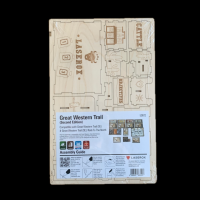 | Great Western Trail: Western Vault 2nd Edition – Laserox Organizer | ● | 2023 |